DECOWALL PANELS DECORATIVE WALL SOLUTIONS 07 5504 7748 decowallpanelsgc@gmail.com 4/29 Upton St, Bundall QLD 4217 Get a quote

Blog

  • Wall Panel Ideas for Kitchens and Laundries

    Most people first hear about PVC wall panels in the context of bathrooms. That makes sense, since bathrooms are where grout and moisture cause the most grief. Kitchens and laundries have exactly the same problems though.

    Grease behind a cooktop. Splashes above a sink. Damp air around a dryer. All of it lands on walls that were never designed to cope.

    Here is how panels solve it, room by room.

    Kitchen Splashbacks

    The splashback takes more abuse than any other surface in the kitchen. Oil, steam, sauce and water hit it daily.

    Tiled splashbacks look fine until the grout goes. Then you are scrubbing thin lines of grease with a toothbrush. Glass splashbacks avoid that, but they are expensive and need a professional measure and install.

    Panels sit neatly in between. The surface is seamless, so grease wipes straight off. In addition, they cost a fraction of what glass does.

    Which Finishes Suit Kitchens

    Lighter finishes keep a kitchen feeling open. Venetian White and Alpine Marble both work well behind benches.

    For a warmer look, Sahara Marble pairs beautifully with timber cabinetry. Meanwhile, Industrial Slate suits darker modern kitchens with black tapware and handles.

    One thing to note. Keep panels a safe distance from open gas flames and check your local requirements around cooktops. We can advise on this when you order.

    Feature Walls in Open Plan Kitchens

    Open plan living means the kitchen is part of the lounge room. Consequently, the walls need to look good from every angle.

    A panelled wall behind a breakfast bar or along a dining nook adds texture without renovation dust. Pewter Marble and Coastal Stone both do this nicely.

    Because panels install over existing surfaces, there is no demolition involved. Therefore the room stays usable throughout.

    Laundry Walls

    Laundries are small, damp and usually ignored. That combination causes mould faster than anywhere else in the house.

    A dryer pushes warm moist air into a tiny room. Over time that moisture sits in painted plasterboard and grout lines.

    Panels give you a fully waterproof wall. There is nothing for mould to feed on and nothing to reseal every few years.

    Above and Behind the Trough

    The wall behind a laundry trough is the worst spot in the room. It gets constant splashing and rarely dries out properly.

    Running panels from the trough up to the ceiling fixes it permanently. Similarly, panelling the wall behind a washing machine protects against leaks and drips.

    Because the panels are lightweight, this is a quick job. Most laundries take half a day.

    Butler’s Pantries and Nooks

    Butler’s pantries are popular in newer Gold Coast homes. They are also usually finished cheaply compared with the main kitchen.

    Panels lift the space without a big spend. For example, matching the panel to the main kitchen splashback ties both areas together.

    Coffee nooks and appliance cupboards benefit too. Anywhere steam collects is a good candidate.

    Installing Around Cabinetry

    Panels can be cut to fit around power points, taps and cabinetry. A sharp blade and a steady hand is usually enough.

    Silicone seals the edges where panels meet benchtops and cupboards. As a result, water cannot get behind the panel.

    If you are unsure about a tricky layout, send us a photo of the space and measurements.

    Cleaning Kitchen and Laundry Panels

    Kitchens deal with grease rather than soap scum. A degreasing spray and a soft cloth handles it easily.

    Laundry walls usually just need warm soapy water. Avoid abrasive scourers in both rooms, since they dull the finish.

    See Them in Person

    Photos never quite capture the texture. It is worth seeing the panels in real light before you decide.

    Visit our wesbite or Bundall showroom on the Gold Coast, or get in touch for advice and a free quote.
  • How to Clean and Maintain PVC Wall Panels

    One of the biggest reasons Australians choose PVC wall panels is how little work they take to look after. Traditional tiles need constant scrubbing. Grout lines trap soap scum, mould and mildew. Panels, however, have a smooth sealed surface with no grout at all.

    Still, a bit of simple care goes a long way. Here is everything you need to know about keeping your panels looking brand new for years.

    Why Panels Are So Easy to Maintain

    PVC wall panels are completely waterproof. Water sits on the surface instead of soaking in. As a result, mould has nowhere to grow and nothing to feed on.

    There are also no joins for dirt to collect in. Our tongue and groove system creates a seamless finish across the whole wall. Therefore, cleaning is simply a matter of wiping a flat surface.

    Everyday Cleaning

    For general upkeep, warm water and a soft cloth is all you need. Wipe the panels down once a week and they will stay looking fresh.

    If you want to go a step further, add a small amount of mild dish soap to the water. Then wipe the panels over and dry them with a clean microfiber cloth. Drying prevents water spots, especially on darker finishes like Graphite Storm and Industrial Slate.

    Removing Soap Scum and Bathroom Build Up

    Bathrooms collect soap residue over time. Shower walls get the worst of it.

    For light build up, use a mix of warm water and white vinegar. Spray it on, leave it for five minutes, then wipe it off. Finally, rinse with clean water and dry the surface.

    For heavier build up, a non abrasive bathroom spray works well. In addition, a soft sponge will help lift residue without marking the panel.

    What To Aviod

    This part matters most. A few products can damage the panel surface permanently.

    Never use these on your panels:

    • Abrasive scourers or steel wool
    • Scouring powders and cream cleansers
    • Bleach in undiluted form
    • Acetone, thinners or solvent based cleaners
    • Stiff bristle brushes

    These will scratch the finish and dull the shine. Above all, remember that panels do not need aggressive cleaning. The surface is designed to release dirt easily.

    Cleaning Kitchen and Splashback Panels

    Kitchen areas deal with grease rather than soap. Consequently, a degreasing spray is your best option.

    Spray it on, let it sit briefly, then wipe with a soft cloth. Similarly, warm soapy water handles most day to day splashes behind a cooktop.

    Looking After Outdoor and Alfresco Panels

    Panels used in pergolas and alfresco areas collect dust and pollen. Therefore, an occasional hose down is usually enough.

    For a deeper clean, use warm soapy water and a soft broom. Avoid pressure washers though. High pressure water can force moisture behind the panel edges.

    Dealing With Marks and Scuffs

    Scuff marks happen in busy areas like hallways and laundries. Fortunately, most lift off easily.

    Try a damp cloth with a little mild soap first. If the mark stays, a melamine foam eraser used gently will usually remove it. Test it in a hidden spot before you go over a visible area.

    Long Term Care Tips

    Ventilate bathrooms well after showers to reduce moisture in the air. Check silicone seals around edges and corners once a year. Reseal them if you notice any gaps or lifting.

    Meanwhile, keep sharp objects away from panel faces during renovations or furniture moves. The panels are tough, but a deep gouge cannot be buffed out.

    How Long Will They Last

    With this basic care, PVC wall panels last for many years without fading, cracking or peeling. In fact, most homeowners find they still look new long after tiled bathrooms have started showing grout stains.

    That low maintenance is exactly why panels suit rentals, holiday homes and busy family bathrooms so well.

    See the Range in Person

    Our full range includes Alpine Marble, Pewter Marble, Hampton Marble, Sahara Marble, Coastal Stone, Venetian White, Industrial Slate and Graphite Storm.

    Visit our website or Bundall showroom on the Gold Coast to see and feel the panels for yourself. Alternatively, get in touch for advice and a free quote.

  • Deco Wall Panels perfect for shipping cont

    Why Deco Wall Panels Are Perfect for Shipping Container Conversions

    Coast and Brisbane, and here’s why.

    Shipping containers have become one of the most popular building blocks for Australians. They’re used to create affordable, functional spaces, from backyard offices and studios to full tiny homes. However, turning a steel box into a comfortable, livable space comes with a unique set of challenges. These include insulation, moisture control, and finding an interior finish that can handle a container’s tight tolerances and condensation-prone walls.

    That’s where Deco Wall Panels come in. Indeed, our waterproof PVC wall panels are quickly becoming the go-to lining solution for container conversions across the Gold Coast and Brisbane, and here’s why.

    The Container Conversion Challenge

    Shipping containers weren’t designed to be homes or offices. Their corrugated steel walls conduct heat, sweat with condensation, and offer zero insulation on their own. Once a container is insulated and framed out, builders need an interior wall finish that is:

    • Lightweight, so it doesn’t add unnecessary load to the structure
    • Quick to install in a compact, awkward space
    • Fully waterproof, especially in bathrooms and kitchens
    • Low-maintenance and resistant to mould and mildew
    • Good-looking, so the finished space doesn’t feel like a shipping container

    Traditional options like painted plasterboard often fall short — gyprock is vulnerable to moisture, prone to cracking as containers flex, and requires ongoing maintenance in a humid Queensland climate.

    Container Offices: A Clean, Professional Finish

    Converted shipping container offices have exploded in popularity for tradies, consultants, and small businesses wanting a fast, affordable workspace without the cost of a traditional build. Indeed, Deco panels give these spaces a polished, modern finish that doesn’t feel industrial or temporary.

    With finishes like Alpine Marble, Venetian White, and Industrial Slate, container offices can look just as professional as a fit-out in a commercial building. What’s more, they install in a fraction of the time of tiling or rendering.

    Tiny Homes: Beauty That Can Handle the Elements

    Container tiny homes need wall linings that can stand up to real living — humidity, temperature swings, and constant use — without compromising on style. Because Deco panels are 100% waterproof, they’re perfectly suited to every room in a container tiny home, not just the wet areas. Living areas, bedrooms, and kitchens all benefit from a durable, easy-clean surface that resists warping in a way plasterboard simply can’t in a steel structure.

    Container Bathrooms: Where Deco Panels Really Shine

    Bathrooms are often the trickiest part of any container conversion — tight footprints, ventilation challenges, and constant moisture exposure. This is where waterproof PVC panelling has a clear advantage over tiles or painted linings:

    • No grout, no mould. Unlike tiled container bathrooms, there are no grout lines for mould and mildew to take hold in.
    • Faster installation. Panels click into place over the framing, ideal for the confined space of a container bathroom.
    • Built for moisture. Fully waterproof from edge to edge, so there’s no risk of water penetrating through to the container’s steel frame.
    • Lightweight. No heavy tile adhesive or cement sheeting adding weight to the structure.

    For builders and owner-builders converting containers into homes, offices, or granny flats, lining the bathroom with the same panel system used throughout the rest of the build also means a consistent look from room to room.

    Why Gold Coast and Brisbane Builders Choose Deco Wall Panels

    As shipping container builds continue to grow across South East Queensland, Deco Wall Panels has become a trusted supplier for builders and DIYers tackling these projects. Visit our Bundall showroom to see and feel the panel finishes in person, or browse the full range online and have panels delivered to your build site.

    Whether you’re converting a container into a home office, a full tiny home, or just need a waterproof solution for the bathroom, Deco Wall Panels gives you a finish that’s fast to install, built to last, and looks nothing like a shipping container.

    Ready to start your container conversion? Get in touch or browse our panel range to find the right finish for your project.

    Get in touch for a free quote today – contact

    Want to know more? Visit our website today!

  • FEATURE WALL PANELS INSIDE AND OUT: HOW PVC WET WALL PANELS TRANSFORM YOUR SPACE

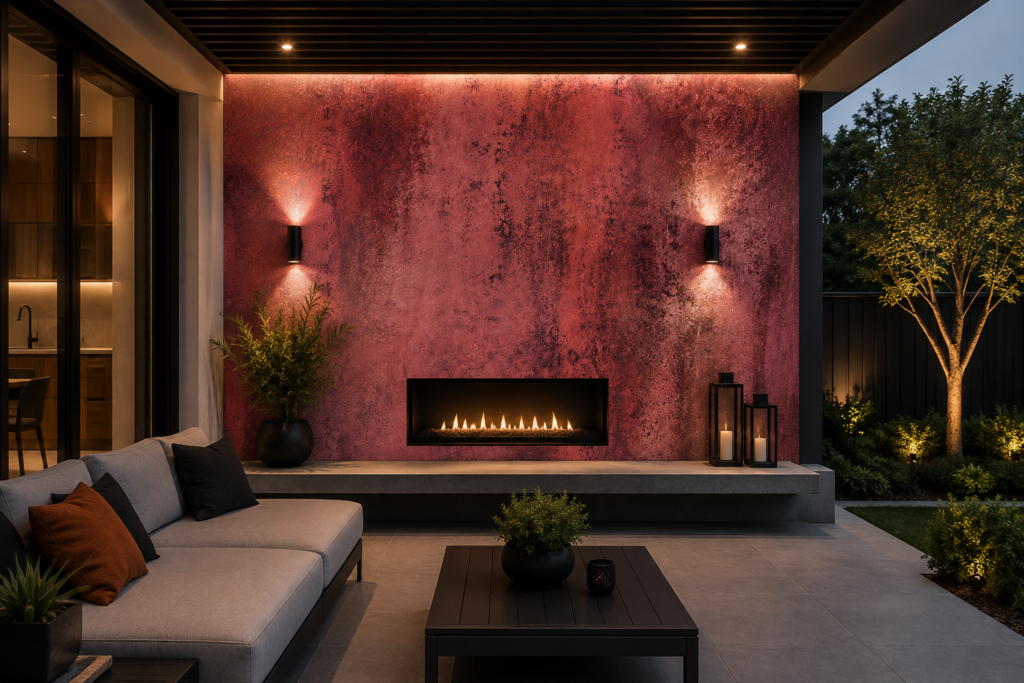
    Feature Walls Inside and Out: How PVC Wall Panels Transform Living Spaces and Outdoor Pergolas

    A feature wall used to mean a single tin of paint and a bit of contrast. These days, however, homeowners and renovators across the Gold Coast want more texture, more depth, and a lot more durability. That’s exactly where our waterproof PVC wall panels come in.

    Marble-look statement walls in the living room, weatherproof pergola makeovers out the back — either way, our panel range handles both.

    Feature Walls Inside the Home

    A feature wall is one of the highest-impact, lowest-effort renovations you can do. Best of all, our panels click into place over a weekend and instantly lift the whole room — no tiling, rendering, or wallpapering required.

    Popular indoor applications we’re seeing right now:

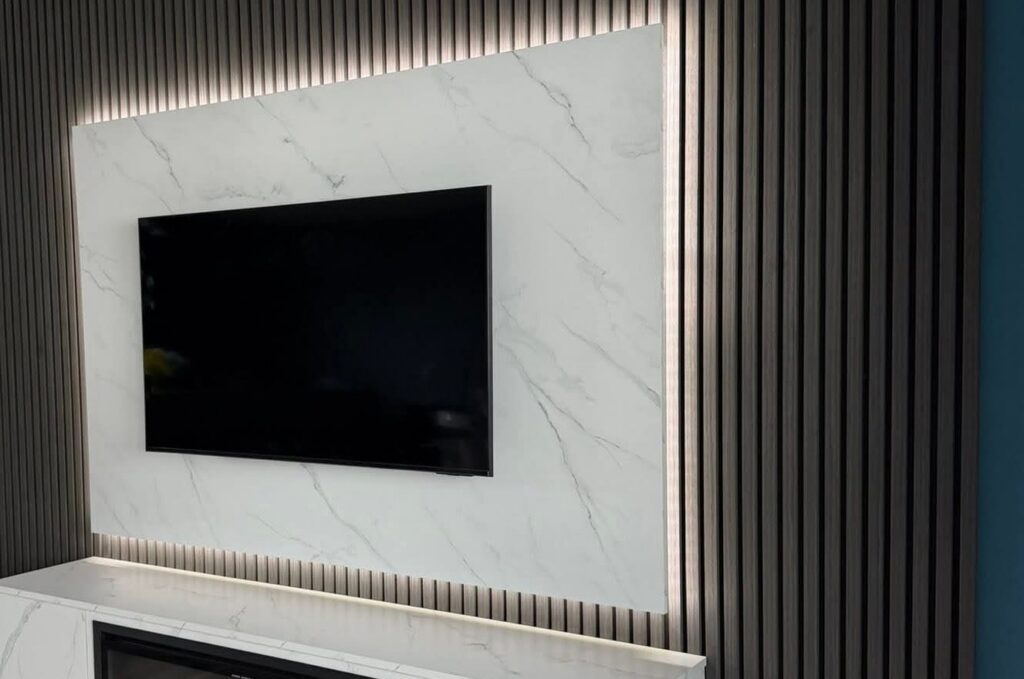
    Living room and TV feature walls — panels like Alpine Marble or Pewter Marble bring a natural stone look, without, however, the price tag or weight of natural stone.

    Hallway and entryway walls — a bold panel near the front door, for example, sets the tone for the whole home.

    Bedroom bedheads — a panel behind the bed frame, for instance, creates a hotel-style focal point.

    Kitchen splashbacks and servery walls — fully waterproof, handling splashes and steam without a second thought.

    Moisture-resistant right through, the panels are a smart choice for bathrooms and ensuites where a traditional feature wall material might struggle long-term.

    Taking It Outdoors: Pergolas and Alfresco Areas

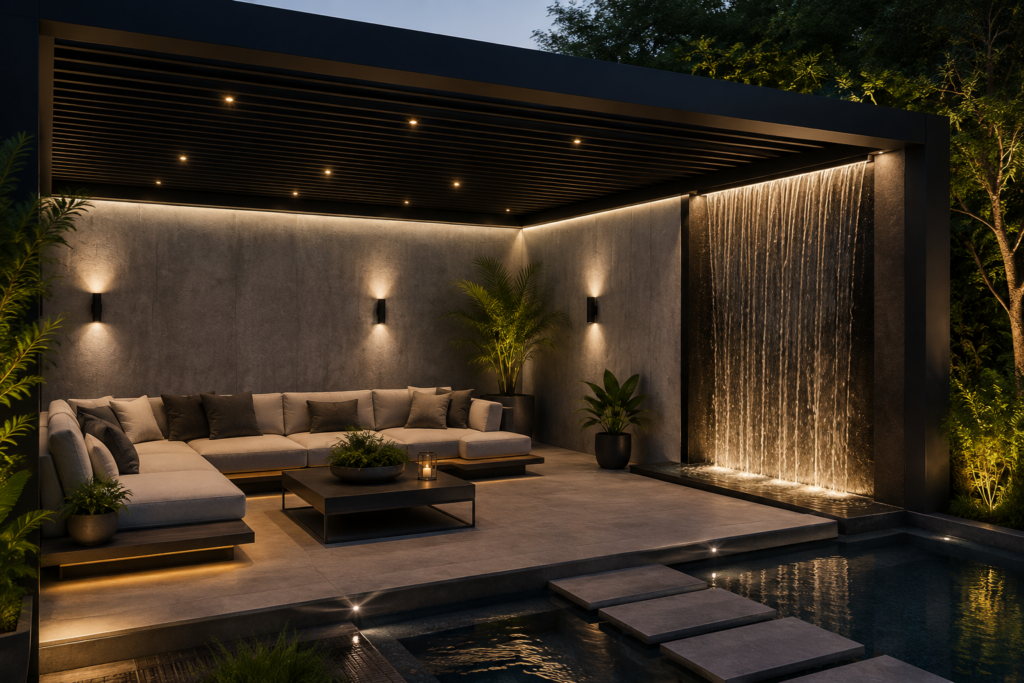
    This is where the panels really prove their versatility. Outdoor living areas on the Gold Coast cop sun, rain, and humidity, and traditional wall linings simply can’t keep up. PVC panels, on the other hand, are built for exactly this kind of punishment.

    Pergola and alfresco spaces:

    Fully waterproof — as a result, no swelling, warping, or water staining even with direct weather exposure.

    UV stable — in fact, won’t fade or discolour the way painted timber can after a Queensland summer.

    Low maintenance — in the end, a wipe-down is all they need, no repainting or resealing.

    Instant style upgrade — turns a bare besser block or timber-frame pergola wall into a genuine outdoor room

    Stone and slate-look finishes like Industrial Slate or Coastal Stone suit outdoor entertaining areas — in fact, natural masonry look, install in a fraction of the time.

    One Panel Range, Two Completely Different Looks

    The same panel looks completely different indoors versus outdoors — customers are often surprised by photos. Inside, under downlights, a marble-look panel feels polished and refined. Outside, however, against greenery and natural light, that same panel reads as a rugged, stone-clad feature — perfect for an alfresco kitchen or pool-side pergola wall.

    A key advantage of panels: a consistent look, and as a result, real flow from the living room through to the entertaining area.

    Ready to See It in Your Own Space?

    Pergola crying out for an upgrade? Or a living room wall that needs more presence? Either way, see the full range in our Bundall showroom or order online — samples available first.

    Browse the range at decowallpanels.com.au or drop into the showroom to talk through what would suit your space best.

  • Can You Install Wall Panels Over Existing Tiles?

    One of the most common questions we receive at Deco Wall Panels is simple but important: can I install wall panels directly over my existing bathroom tiles? Or do I need to remove them first?

    The good news is that in most cases, yes, you can. PVC wall panels can go directly over existing tiles. This is one of the biggest advantages panels have over traditional retiling. It’s also why thousands of Australian homeowners are choosing panels for their bathroom renovations.

    Here’s everything you need to know.

    Why Installing Over Existing Tiles Is Such a Big Deal

    Traditional bathroom retiling requires complete removal of your existing tiles before new ones can go on. This process involves:

    • A tradie with an angle grinder and chisel spending one to two days removing tiles
    • Significant dust, noise, and mess throughout your home
    • Risk of damage to the waterproofing membrane underneath
    • Skip bin hire to dispose of the old tiles
    • Potential repair work to the substrate before new tiles can go on
    • Total additional cost of $1,500 to $3,500 before you lay a single new tile

    PVC wall panels eliminate all of that. Because they bond directly over your existing tiles with adhesive, there is no demolition, no mess, no skip bin, and no risk of damaging the waterproofing that’s already in place underneath your tiles.

    When Can You Install Over Existing Tiles?

    Installing wall panels over existing tiles works well in most situations. Here are the conditions that need to be met:

    The existing tiles must be structurally sound. Your existing tiles need to be firmly bonded to the wall with no loose, cracked, or hollow tiles. Press firmly on each tile across the whole wall — if any tiles move, sound hollow, or feel loose, you should refix or remove them before panelling over them. A loose tile under a panel will eventually cause problems.

    The surface must be reasonably flat. PVC wall panels are rigid and need a reasonably flat surface to bond to correctly. Most tiled walls are flat enough for panels to go over without issue. If your tiles have very deep grout lines — more than 3mm — you may need to skim over them with tile adhesive first to create a flatter surface.

    The tiles must be clean and grease free. Before installation, you need to thoroughly clean your existing tiles to remove any soap scum, grease, mould, or cleaning product residue. This ensures the panel adhesive bonds correctly to the tile surface. A good clean with sugar soap or a degreaser is all that’s needed in most cases.

    There must be adequate room for the extra thickness. PVC wall panels add approximately 10mm to your wall thickness. In most bathrooms this makes no practical difference. However, you should check that your shower screen, door frames, and any recessed shelves or niches won’t be affected by the additional thickness before you start.

    When Should You NOT Install Over Existing Tiles?

    While installing over existing tiles works in most situations there are some cases where removal is the better option:

    • Multiple layers of tiles already exist. If tiles have already been tiled over once before — meaning there are two layers of tiles on your walls — adding a third layer of panels may create too much thickness and could cause issues with fixtures and fittings. In this situation removing at least one layer of tiles first is advisable.
    • Significant damp or mould behind the tiles. If you have evidence of water penetration behind your existing tiles — such as tiles that are consistently damp, bubbling paint nearby, or a musty smell — the underlying issue needs to be addressed before panelling over it. Covering a damp problem will make it worse not better.
    • Severely uneven or damaged walls. If your existing tiles are very uneven, badly damaged, or the wall behind them is compromised, removal and repair is the better long term solution.

    Step by Step — Installing Wall Panels Over Existing Tiles

    If your existing tiles meet the conditions above here’s how the installation process works:

    Step 1 — Clean the existing tiles thoroughly Use sugar soap or a degreaser to remove all soap scum, grease, and residue. Rinse well and allow to dry completely before proceeding.

    Step 2 — Check for and fix any loose tiles Press firmly on every tile to identify any that are loose or hollow. Refix any loose tiles with tile adhesive and allow to cure before proceeding.

    Step 3 — Sand any very smooth or glazed tile surfaces If your existing tiles have a very high gloss finish a light sand with 80 grit sandpaper will help the panel adhesive bond more effectively.

    Step 4 — Measure and cut your panels Measure your wall height and width carefully. Cut panels to size using a fine tooth saw or utility knife and straight edge. Always measure twice and cut once.

    Step 5 — Apply panel adhesive Apply panel adhesive to the back of your panel in a series of vertical beads approximately 200mm apart. Use an adhesive recommended for PVC panels and tiled surfaces.

    Step 6 — Fix the panel to the wall Press the panel firmly into position starting from one corner. Use a spirit level to ensure it’s perfectly vertical. Hold or brace the panel for the time specified by your adhesive manufacturer.

    Step 7 — Continue with remaining panels Use the tongue and groove system to interlock each subsequent panel with the last. The tongue and groove join creates a seamless watertight connection between panels.

    Step 8 — Seal all edges Apply silicone sealant to all edges, corners, and penetrations including around taps, shower heads, and where panels meet the floor, ceiling, and any fixtures. This is the most important step for waterproofing — take your time and do it carefully.

    Step 9 — Fit corner trims and joiners Use corner trims and joining strips at all internal and external corners for a neat professional finish.

    How Many Panels Do I Need?

    Each Deco Wall Panel is 2400mm tall by 1000mm wide. To calculate how many panels you need simply measure the width of each wall you want to panel and divide by 1000mm. Round up to the nearest whole panel and add one extra for cuts and wastage.

    For example a standard 1500mm wide shower recess requires two panels — one full panel and one cut to 500mm width.

    Not sure how many panels you need? Send us your bathroom dimensions and a photo and we’ll work it out for you — completely free with no obligation.

    What About Waterproofing?

    When you install panels over existing tiles the existing waterproofing membrane beneath the tiles remains in place and continues to do its job. The PVC panels themselves are also 100% waterproof. As long as all edges and joins are correctly sealed with silicone sealant your panelled bathroom will be fully waterproof.

    Ready to Transform Your Bathroom?

    At Deco Wall Panels we supply premium waterproof PVC wall panels in eight stunning finishes — Alpine Marble, Pewter Marble, Hampton Marble, Venetian White, Coastal Stone, Sahara Marble, Industrial Slate, and Graphite Storm. All panels are 2400mm x 1000mm x 10mm with a tongue and groove fitting system, shipping Australia-wide from our Gold Coast base.

    Send us your bathroom dimensions and a photo and we’ll recommend the right panels, calculate your quantities, and give you a complete quote including delivery to your door.

    Get free advice and a quote → Contact

    Want to know more? Visit our website

  • How Much Does a Bathroom Renovation Cost in Australia in 2026?

    The Average Bathroom Renovation Cost in Australia

    Bathroom renovation costs in Australia have risen significantly in recent years, and in 2026, they show no signs of coming down. Indeed, whether you’re refreshing a dated ensuite, upgrading a rental property bathroom, or completely transforming your main bathroom, understanding the real costs involved is essential before you start.

    This guide, therefore, breaks down the true cost of bathroom renovation in Australia in 2026, and reveals a smarter, more affordable alternative that thousands of Australians are already choosing.

    The Average Cost of a Full Bathroom Renovation in Australia

    Found a few genuine ones. Here’s the passage with passive voice fixed:

    According to recent industry data, the average full bathroom renovation in Australia in 2026 costs between $15,000 and $35,000 for a standard sized bathroom. In fact, high-end renovations in premium suburbs of Sydney, Melbourne, and Brisbane can easily exceed $50,000.

    Even a basic bathroom refresh — replacing tiles, updating fixtures, and regrouting — can, nonetheless, cost $8,000 to $15,000 when you factor in all the trades involved.

    Here’s where the money goes in a typical full bathroom renovation:

    Demolition and removal — $1,000 to $3,000. This covers removing old tiles, fixtures, and fittings. It also includes skip bin hire and disposal costs, which have risen sharply in 2026.

    Waterproofing — $500 to $1,500. Australian law requires a licensed waterproofer for wet areas. However, this cost is often overlooked in initial budgets.

    Tiling — $3,000 to $10,000. This is typically the largest single cost in any bathroom renovation. Indeed, tiler labour rates have increased significantly across Australia due to the ongoing trades shortage. Furthermore, in Brisbane and South East Queensland, the 2032 Olympics construction boom has pushed tiling costs even higher, with many tilers now booking out 12 to 20 weeks in advance.

    Plumbing — $1,500 to $4,000. Relocating or replacing fixtures, installing new tapware, and connecting new fittings all require a licensed plumber.

    Electrical — $500 to $2,000. Similarly, new lighting, exhaust fans, and heated towel rails require a licensed electrician.

    Vanity and fixtures — $1,000 to $5,000. A quality vanity, toilet, shower screen, tapware, and accessories add up quickly. That said, budget options exist, though quality fixtures cost more.

    Painting and finishing — $500 to $1,500. Finally, this covers painting, siliconing, and finishing touches.

    Why Bathroom Renovation Costs Keep Rising

    Several factors are driving bathroom renovation costs higher in 2026:

    Trades shortage — Australia has a significant shortage of licensed tradespeople. Tilers, plumbers, and waterproofers are in high demand and short supply, pushing labour rates up across the board.

    Material costs — Building materials, including tiles, fixtures, and fittings, have increased in price due to ongoing supply chain pressures and inflation.

    Disposal costs — Skip bin hire and waste disposal have become significantly more expensive in most Australian cities.

    Demand — The post-pandemic renovation boom has continued into 2026, with Australians continuing to invest heavily in their homes, driving demand for trades even higher.

    The Smart Alternative — PVC Bathroom Wall Panels

    For homeowners who want a beautiful modern bathroom without the $15,000 to $35,000 price tag, there is, however, a genuinely compelling alternative: PVC bathroom wall panels installed yourself.

    Here’s what a DIY wall panel bathroom renovation typically costs:

    PVC wall panels — $800 to $2,000. This depends on bathroom size and how many walls you’re panelling. Panels at Deco Wall Panels start from $179 each, with most standard bathrooms requiring 6 to 10 panels.

    Corner trims and joiners — $100 to $300. These are essential for a neat, watertight finish at all edges and corners.

    Adhesive and sealant — $80 to $150. These are the right products to bond and seal your installation correctly.

    Total DIY wall panel renovation — $1,000 to $2,500.

    As a result, that’s a saving of $10,000 to $30,000 compared to a full traditional renovation, without sacrificing the look or quality of the result.

    What About the Rest of the Bathroom?

    Wall panels replace the tiling component of your renovation, the single biggest cost. However, you can still update other elements yourself to transform your bathroom completely:

    • New tapware — in most cases, a new shower head and basin tap can be replaced without a plumber, costing $100 to $500
    • New vanity mirror — a stylish mirror costs $50 to $300 and, indeed, makes a huge visual difference
    • New toilet seat — a quick and easy upgrade for $50 to $150
    • New accessories — towel rails, toilet roll holders, and soap dispensers can likewise be replaced without trades for $100 to $300
    • Fresh paint — finally, painting the bathroom walls and ceiling yourself costs $50 to $150 in materials

    A complete DIY bathroom transformation using wall panels and updated accessories can be achieved for $1,500 to $3,500 — a fraction of traditional renovation costs.

    Is a DIY Wall Panel Renovation Right for You?

    Wall panel renovations are ideal for:

    • Homeowners who want a modern bathroom without the full renovation cost
    • Landlords upgrading rental properties between tenants on a tight budget
    • Holiday rental owners refreshing bathrooms to improve booking rates
    • First home buyers personalising builder standard bathrooms
    • Anyone who can’t wait months for a tiler

    They may not be the right solution if you need to relocate plumbing, replace your shower base, or make structural changes — those elements still require licensed trades.

    How to Get Started

    At Deco Wall Panels we supply premium waterproof PVC wall panels in eight stunning finishes, shipping Australia-wide from our Gold Coast base. Send us your bathroom dimensions and a photo and we’ll calculate exactly what you need and provide a complete quote including delivery to your door.

    Our panels are 2400mm x 1000mm x 10mm, weigh 11kg each, and feature a tongue and groove interlocking system for a seamless professional finish.

    Get free advice and a quote → Contact

    Want to know more? Visit our website today!

  • How to Renovate a Bathroom Without a Tiler

    Renovating a bathroom in Australia has never been more expensive, or more frustrating. Indeed, tilers in major cities are booking 12 to 20 weeks in advance. Labour costs, meanwhile, continue to rise. As a result, more Australian homeowners are asking the same question: is there a way to get a beautiful new bathroom without waiting months or spending a fortune on trades?

    The answer, in fact, is yes, and thousands of Australians are already doing it with PVC bathroom wall panels.

    Why Tilers Are So Hard to Get Right Now

    Australia is in the middle of a trades shortage that shows no signs of easing. In fact, in cities like Brisbane, Sydney, and Melbourne, licensed tilers are booked out months in advance. Meanwhile, the 2032 Brisbane Olympics construction boom is making the situation even worse across South East Queensland, with residential renovation tradespeople increasingly difficult to find at any price.

    As a result, for homeowners who simply want to refresh an outdated bathroom, waiting three to five months for a tiler is often the first obstacle. Furthermore, once the wait is over, paying $3,000 to $8,000 or more in labour alone is simply not practical or affordable.

    What Are PVC Bathroom Wall Panels?

    PVC bathroom wall panels are a modern alternative to traditional ceramic tiles. Essentially, they’re large format waterproof panels, typically 2400mm tall by 1000mm wide, that fix directly to your bathroom walls using adhesive. They come in a wide range of finishes including marble, stone, concrete, and timber looks, and they’re 100% waterproof, making them fully suitable for showers, ensuites, and wet areas.

    The key difference from tiles is simple: no grout. Specifically, PVC panels have a tongue and groove interlocking system that creates a seamless watertight join between panels, eliminating grout lines entirely.

    Can I Really Install Them Myself?

    Yes, and this is, in fact, the biggest advantage of PVC wall panels over traditional tiles. Wall panel installation, on the other hand, is well within the capabilities of a confident DIYer, and in fact, most homeowners can complete it in a single weekend.Here’s what you need:

    • A tape measure
    • A utility knife or fine tooth saw
    • Panel adhesive
    • Silicone sealant
    • A caulking gun
    • A spirit level

    Most homeowners complete a standard bathroom installation in a single day. Instead, there’s no mixing of grout, no waiting for adhesive to cure before grouting, and, best of all, no messy cleanup to deal with afterward. You simply measure, cut, fix, and seal.

    Can I Install Panels Over My Existing Tiles?

    In most cases, yes, and this is one of the most compelling advantages of wall panels for renovation projects. Indeed, provided that your existing tiles are structurally sound, clean, and reasonably flat, panels can bond directly over the top using the right adhesive. This means:

    • No demolition
    • No skip bin hire
    • No dust and mess
    • No structural work
    • Minimal noise and disruption

    For apartment owners and landlords, this is especially valuable. Indeed, you can completely transform a bathroom without the mess and disruption of a full tile removal job, which ultimately makes it a far more practical choice.

    How Much Can I Save?

    The savings compared to traditional tiling can be significant. A typical bathroom tiling job in Australia involves:

    • Tile removal — $500 to $1,500
    • Waterproofing membrane — $300 to $600
    • Tiles and materials — $500 to $2,000
    • Tiler labour — $2,000 to $6,000
    • Grouting and finishing — included in labour

    Total cost: $3,000 to $10,000 or more depending on bathroom size and complexity.

    In comparison, PVC wall panels installed yourself can achieve a comparable modern finish for a fraction of that cost, with no labour bill and no waiting.

    What About Waterproofing?

    PVC wall panels are 100% waterproof by nature; water simply cannot penetrate the panel surface. Indeed, when installed correctly, with the right adhesive and silicone sealant at all edges, joins, and penetrations, a panel bathroom is fully waterproof and suitable for shower areas.

    It’s important to note, first and foremost, that Australian building standards require proper waterproofing of wet areas. Furthermore, if you’re installing panels in a new bathroom, or over a substrate that isn’t already waterproofed, you should nonetheless ensure appropriate waterproofing is in place beforehand. That said, for most renovation projects where panels are going over existing tiles, this is already taken care of.

    Which Finishes Are Available?

    Modern PVC wall panels are a far cry from the plain white panels of years past. Indeed, today’s ranges include stunning finishes that are virtually indistinguishable from real stone and marble at a fraction of the cost. Popular finishes include:

    • Classic marble looks — white with grey veining
    • Warm stone and travertine finishes
    • Bold concrete and industrial looks
    • Warm timber and oak finishes

    At Deco Wall Panels, we offer eight premium finishes, including Alpine Marble, Venetian White, Coastal Stone, Industrial Slate, and Graphite Storm. All of these come in a 2400mm x 1000mm x 10mm panel with a tongue and groove fitting system.

    How Do I Get Started?

    The easiest way to get started, then, is to measure your bathroom walls — length and height of each wall you want to panel — and contact us with those measurements. From there, we’ll calculate exactly how many panels, trims, and accessories you need and give you a complete shopping list with a shipping estimate to your door.

    Additionally, we ship Australia-wide from our Gold Coast base and offer fast delivery to all major cities and regional areas.

    Get free advice and a quote → Contact

    Or visit our website now

  • Tiles vs Wall Panels — Which is Better for Your Bathroom?

    If you’re renovating a bathroom in 2026, you’ve probably already discovered there are two main options for your walls: traditional ceramic tiles or the newer generation of PVC wall panels. Both can look stunning. However, once you dig into the real-world differences in cost, installation time, maintenance, and long-term performance, the picture becomes clear. In fact, it becomes clear very quickly. So, before you commit to either option, it’s worth understanding exactly what you’re getting into.

    Here’s an honest comparison to help you make the right decision for your bathroom.

    THE COST COMPARISON

    Let’s start with the most important factor for most Australian homeowners — cost.

    A standard bathroom tiling job in Australia typically costs between $3,000 and $8,000 in labour alone. This is not including the cost of tiles, grout, waterproofing membrane, and other materials. In major cities like Sydney and Brisbane where trades are in high demand there is another 20-30% on top of that.

    INSTALLATION TIME

    Tiling a bathroom is a multi-day process. The tiler needs to prepare the surface, apply waterproofing membrane, lay the tiles, grout, seal, and clean up. Factor in drying and curing time and you’re looking at a minimum of 3-5 days of work. In South East Queensland right now tilers are booking 12 to 20 weeks in advance.

    PVC wall panels can be installed in a single day by a confident DIYer. Measure, cut, fix with adhesive, seal the edges, and you’re done. No waiting weeks for a tradesperson, no days of disruption, and no bathroom out of action for a week.

    WATERPROOFING AND WET AREA PERFORMANCE

    This is where many people assume tiles have the advantage — but the reality is more nuanced.

    Tiles themselves are waterproof. But grout is not. Grout is porous, absorbs moisture, and over time grows mould, stains, and deteriorates — particularly in Australia’s humid coastal and subtropical climates. Regrouting a bathroom is expensive and disruptive and most tiled bathrooms need it every 5-10 years.

    PVC wall panels have no grout lines. The surface is completely sealed and 100% waterproof from top to bottom. There is nowhere for moisture to penetrate, nowhere for mould to grow, and nothing to regrout or reseal. In Queensland’s humidity and in coastal homes where salt air accelerates grout deterioration, PVC panels significantly outperform tiles for long term waterproof performance.

    MAINTENANCE AND CLEANING

    Ask any homeowner what they hate most about their bathroom and grout cleaning will be near the top of the list. Scrubbing grout lines is time consuming, frustrating, and never ending.

    PVC wall panels wipe clean with a damp cloth in seconds. No scrubbing, no bleach, no grout brushes. For rental properties and holiday rentals this is a massive advantage — a quick wipe between tenants or guests and the bathroom looks brand new.

    APPEARANCE AND DESIGN OPTIONS

    This is where tiles have traditionally had the advantage — but that gap has closed significantly in recent years. Modern PVC wall panels are available in a wide range of premium finishes including marble looks, natural stone, concrete, and timber — with large format panels that create a seamless, grout-free finish that actually looks more luxurious than most tiled bathrooms.

    At Deco Wall Panels our range includes eight premium finishes — from the classic elegance of Alpine Marble and Hampton Marble to the bold drama of Graphite Storm and the warm coastal feel of Coastal Stone and Sahara Marble.

    DURABILITY AND LONGEVITY

    Quality ceramic tiles are extremely durable and can last decades. However grout — the weak point of any tiled bathroom — typically needs attention every 5-10 years.

    Quality PVC wall panels are also highly durable, resistant to impact, moisture, and temperature changes, and require no ongoing maintenance beyond regular cleaning. With no grout to deteriorate the long term performance of a PVC panel bathroom is arguably superior to tiles in Australian conditions.

    Ready to explore wall panels for your bathroom?

    At Deco Wall Panels we supply premium waterproof PVC wall panels in eight stunning finishes, shipping Australia-wide from our Gold Coast base. Send us your bathroom dimensions and a photo and we’ll recommend the perfect panels for your space.

    Want to learn more? Visit our website today!

    Get free advice and a quote → Contact

Deco Wall Panels

Deco Wall Panels supplies waterproof PVC bathroom wall panels that replace tiles, with an easy DIY install and Australia-wide shipping.

Twenty Twenty-Five

Designed with WordPress