Author: 960483pwpadmin

  • Can You Install Wall Panels Over Existing Tiles?

    One of the most common questions we receive at Deco Wall Panels is simple but important — can I install wall panels directly over my existing bathroom tiles, or do I need to remove them first?

    The good news is that in most cases yes, you absolutely can install PVC wall panels directly over existing tiles. This is one of the biggest advantages of wall panels over traditional retiling and it’s the reason thousands of Australian homeowners are choosing panels for their bathroom renovations.

    Here’s everything you need to know.

    Why Installing Over Existing Tiles Is Such a Big Deal

    Traditional bathroom retiling requires complete removal of your existing tiles before new ones can go on. This process involves:

    • A tradie with an angle grinder and chisel spending one to two days removing tiles
    • Significant dust, noise, and mess throughout your home
    • Risk of damage to the waterproofing membrane underneath
    • Skip bin hire to dispose of the old tiles
    • Potential repair work to the substrate before new tiles can go on
    • Total additional cost of $1,500 to $3,500 before a single new tile is laid

    PVC wall panels eliminate all of that. Because they bond directly over your existing tiles with adhesive there is no demolition, no mess, no skip bin, and no risk of damaging the waterproofing that’s already in place underneath your tiles.

    When Can You Install Over Existing Tiles?

    Installing wall panels over existing tiles works well in most situations. Here are the conditions that need to be met:

    • The existing tiles must be structurally sound. Your existing tiles need to be firmly bonded to the wall with no loose, cracked, or hollow tiles. Press firmly on each tile across the whole wall — if any tiles move, sound hollow, or feel loose they should be refixed or removed before panelling over them. A loose tile under a panel will eventually cause problems.
    • The surface must be reasonably flat. PVC wall panels are rigid and need a reasonably flat surface to bond to correctly. Most tiled walls are flat enough for panels to go over without issue. If your tiles have very deep grout lines — more than 3mm — you may need to skim over them with tile adhesive first to create a flatter surface.
    • The tiles must be clean and grease free. Before installation your existing tiles need to be thoroughly cleaned to remove any soap scum, grease, mould, or cleaning product residue. This ensures the panel adhesive bonds correctly to the tile surface. A good clean with sugar soap or a degreaser is all that’s needed in most cases.
    • There must be adequate room for the extra thickness. PVC wall panels add approximately 10mm to your wall thickness. In most bathrooms this makes no practical difference. However you should check that your shower screen, door frames, and any recessed shelves or niches won’t be affected by the additional thickness before you start.

    When Should You NOT Install Over Existing Tiles?

    While installing over existing tiles works in most situations there are some cases where removal is the better option:

    • Multiple layers of tiles already exist. If tiles have already been tiled over once before — meaning there are two layers of tiles on your walls — adding a third layer of panels may create too much thickness and could cause issues with fixtures and fittings. In this situation removing at least one layer of tiles first is advisable.
    • Significant damp or mould behind the tiles. If you have evidence of water penetration behind your existing tiles — such as tiles that are consistently damp, bubbling paint nearby, or a musty smell — the underlying issue needs to be addressed before panelling over it. Covering a damp problem will make it worse not better.
    • Severely uneven or damaged walls. If your existing tiles are very uneven, badly damaged, or the wall behind them is compromised, removal and repair is the better long term solution.

    Step by Step — Installing Wall Panels Over Existing Tiles

    If your existing tiles meet the conditions above here’s how the installation process works:

    Step 1 — Clean the existing tiles thoroughly Use sugar soap or a degreaser to remove all soap scum, grease, and residue. Rinse well and allow to dry completely before proceeding.

    Step 2 — Check for and fix any loose tiles Press firmly on every tile to identify any that are loose or hollow. Refix any loose tiles with tile adhesive and allow to cure before proceeding.

    Step 3 — Sand any very smooth or glazed tile surfaces If your existing tiles have a very high gloss finish a light sand with 80 grit sandpaper will help the panel adhesive bond more effectively.

    Step 4 — Measure and cut your panels Measure your wall height and width carefully. Cut panels to size using a fine tooth saw or utility knife and straight edge. Always measure twice and cut once.

    Step 5 — Apply panel adhesive Apply panel adhesive to the back of your panel in a series of vertical beads approximately 200mm apart. Use an adhesive recommended for PVC panels and tiled surfaces.

    Step 6 — Fix the panel to the wall Press the panel firmly into position starting from one corner. Use a spirit level to ensure it’s perfectly vertical. Hold or brace the panel for the time specified by your adhesive manufacturer.

    Step 7 — Continue with remaining panels Use the tongue and groove system to interlock each subsequent panel with the last. The tongue and groove join creates a seamless watertight connection between panels.

    Step 8 — Seal all edges Apply silicone sealant to all edges, corners, and penetrations including around taps, shower heads, and where panels meet the floor, ceiling, and any fixtures. This is the most important step for waterproofing — take your time and do it carefully.

    Step 9 — Fit corner trims and joiners Use corner trims and joining strips at all internal and external corners for a neat professional finish.

    How Many Panels Do I Need?

    Each Deco Wall Panel is 2400mm tall by 1000mm wide. To calculate how many panels you need simply measure the width of each wall you want to panel and divide by 1000mm. Round up to the nearest whole panel and add one extra for cuts and wastage.

    For example a standard 1500mm wide shower recess requires two panels — one full panel and one cut to 500mm width.

    Not sure how many panels you need? Send us your bathroom dimensions and a photo and we’ll work it out for you — completely free with no obligation.

    What About Waterproofing?

    When you install panels over existing tiles the existing waterproofing membrane beneath the tiles remains in place and continues to do its job. The PVC panels themselves are also 100% waterproof. As long as all edges and joins are correctly sealed with silicone sealant your panelled bathroom will be fully waterproof.

    Ready to Transform Your Bathroom?

    At Deco Wall Panels we supply premium waterproof PVC wall panels in eight stunning finishes — Alpine Marble, Pewter Marble, Hampton Marble, Venetian White, Coastal Stone, Sahara Marble, Industrial Slate, and Graphite Storm. All panels are 2400mm x 1000mm x 10mm with a tongue and groove fitting system, shipping Australia-wide from our Gold Coast base.

    Send us your bathroom dimensions and a photo and we’ll recommend the right panels, calculate your quantities, and give you a complete quote including delivery to your door.

    Get free advice and a quote → Contact

  • How Much Does a Bathroom Renovation Cost in Australia in 2026?

    Bathroom renovation costs in Australia have risen significantly in recent years — and in 2026 they show no signs of coming down. Whether you’re refreshing a dated ensuite, upgrading a rental property bathroom, or completely transforming your main bathroom, understanding the real costs involved is essential before you start.

    This guide breaks down the true cost of bathroom renovation in Australia in 2026 — and reveals a smarter, more affordable alternative that thousands of Australians are already choosing.

    The Average Cost of a Full Bathroom Renovation in Australia

    According to recent industry data, the average full bathroom renovation in Australia in 2026 costs between $15,000 and $35,000 for a standard sized bathroom. High end renovations in premium suburbs of Sydney, Melbourne, and Brisbane can easily exceed $50,000.

    Even a basic bathroom refresh — replacing tiles, updating fixtures, and regrouting — can cost $8,000 to $15,000 when you factor in all the trades involved.

    Here’s where the money goes in a typical full bathroom renovation:

    Demolition and removal — $1,000 to $3,000 Removing old tiles, fixtures, and fittings. Includes skip bin hire and disposal costs which have risen sharply in 2026.

    Waterproofing — $500 to $1,500 A licensed waterproofer is legally required for wet areas in Australia. This cost is often overlooked in initial budgets.

    Tiling — $3,000 to $10,000 This is typically the largest single cost in any bathroom renovation. Tiler labour rates have increased significantly across Australia due to the ongoing trades shortage. In Brisbane and South East Queensland, the 2032 Olympics construction boom has pushed tiling costs even higher with many tilers now booked 12 to 20 weeks in advance.

    Plumbing — $1,500 to $4,000 Relocating or replacing fixtures, installing new tapware, and connecting new fittings all require a licensed plumber.

    Electrical — $500 to $2,000 New lighting, exhaust fans, and heated towel rails require a licensed electrician.

    Vanity and fixtures — $1,000 to $5,000 A quality vanity, toilet, shower screen, tapware, and accessories add up quickly. Budget options exist but quality fixtures cost more.

    Painting and finishing — $500 to $1,500 Final painting, siliconing, and finishing touches

    Why Bathroom Renovation Costs Keep Rising

    Several factors are driving bathroom renovation costs higher in 2026:

    Trades shortage — Australia has a significant shortage of licensed tradespeople. Tilers, plumbers, and waterproofers are in high demand and short supply, pushing labour rates up across the board.

    Material costs — Building materials including tiles, fixtures, and fittings have increased in price due to ongoing supply chain pressures and inflation.

    Disposal costs — Skip bin hire and waste disposal have become significantly more expensive in most Australian cities.

    Demand — The post-pandemic renovation boom has continued into 2026 with Australians continuing to invest heavily in their homes driving demand for trades even higher.

    The Smart Alternative — PVC Bathroom Wall Panels

    For homeowners who want a beautiful modern bathroom without the $15,000 to $35,000 price tag there is a genuinely compelling alternative — PVC bathroom wall panels installed yourself.

    Here’s what a DIY wall panel bathroom renovation typically costs:

    PVC wall panels — $800 to $2,000 Depending on bathroom size and number of walls being panelled. Panels at Deco Wall Panels start from $179 each with most standard bathrooms requiring 6 to 10 panels.

    Corner trims and joiners — $100 to $300 Essential for a neat watertight finish at all edges and corners.

    Adhesive and sealant — $80 to $150 The right products to bond and seal your installation correctly.

    Total DIY wall panel renovation — $1,000 to $2,500

    That’s a saving of $10,000 to $30,000 compared to a full traditional renovation — without sacrificing the look or quality of the result.

    What About the Rest of the Bathroom?

    Wall panels replace the tiling component of your renovation — the single biggest cost. But you can still update other elements yourself to transform your bathroom completely:

    • New tapware — a new shower head and basin tap can be replaced without a plumber in most cases and costs $100 to $500
    • New vanity mirror — a stylish mirror costs $50 to $300 and makes a huge visual difference
    • New toilet seat — a quick and easy upgrade for $50 to $150
    • New accessories — towel rails, toilet roll holders, and soap dispensers can be replaced without trades for $100 to $300
    • Fresh paint — painting bathroom walls and ceiling yourself costs $50 to $150 in materials

    A complete DIY bathroom transformation using wall panels and updated accessories can be achieved for $1,500 to $3,500 — a fraction of traditional renovation costs.

    Is a DIY Wall Panel Renovation Right for You?

    Wall panel renovations are ideal for:

    • Homeowners who want a modern bathroom without the full renovation cost
    • Landlords upgrading rental properties between tenants on a tight budget
    • Holiday rental owners refreshing bathrooms to improve booking rates
    • First home buyers personalising builder standard bathrooms
    • Anyone who can’t wait months for a tiler

    They may not be the right solution if you need to relocate plumbing, replace your shower base, or make structural changes — those elements still require licensed trades.

    How to Get Started

    At Deco Wall Panels we supply premium waterproof PVC wall panels in eight stunning finishes, shipping Australia-wide from our Gold Coast base. Send us your bathroom dimensions and a photo and we’ll calculate exactly what you need and provide a complete quote including delivery to your door.

    Our panels are 2400mm x 1000mm x 10mm, weigh 11kg each, and feature a tongue and groove interlocking system for a seamless professional finish.

    Get free advice and a quote → Contact

  • How to Renovate a Bathroom Without a Tiler

    Renovating a bathroom in Australia has never been more expensive — or more frustrating. With tilers in major cities booking 12 to 20 weeks in advance and labour costs continuing to rise, more Australian homeowners are asking the same question: is there a way to get a beautiful new bathroom without waiting months and spending a fortune on trades?

    The answer is yes — and thousands of Australians are already doing it with PVC bathroom wall panels.

    Why Tilers Are So Hard to Get Right Now

    Australia is in the middle of a trades shortage that shows no signs of easing. In cities like Brisbane, Sydney, and Melbourne, licensed tilers are booked out months in advance. The 2032 Brisbane Olympics construction boom is making the situation even worse across South East Queensland, with residential renovation tradespeople increasingly difficult to find at any price.

    For homeowners who simply want to refresh an outdated bathroom, waiting three to five months for a tiler — and then paying $3,000 to $8,000 or more in labour alone — is simply not practical or affordable.

    What Are PVC Bathroom Wall Panels?

    PVC bathroom wall panels are a modern alternative to traditional ceramic tiles. They’re large format waterproof panels — typically 2400mm tall by 1000mm wide — that fix directly to your bathroom walls using adhesive. They come in a wide range of finishes including marble, stone, concrete, and timber looks, and they’re 100% waterproof making them fully suitable for showers, ensuites, and wet areas.

    The key difference from tiles is simple — no grout. PVC panels have a tongue and groove interlocking system that creates a seamless watertight join between panels, eliminating grout lines entirely.

    Can I Really Install Them Myself?

    Yes — and this is the biggest advantage of PVC wall panels over traditional tiles. While tiling requires years of training and specialised tools, wall panel installation is well within the capabilities of a confident DIYer. Here’s what you need:

    • A tape measure
    • A utility knife or fine tooth saw
    • Panel adhesive
    • Silicone sealant
    • A caulking gun
    • A spirit level

    Most homeowners complete a standard bathroom installation in a single day. There’s no mixing of grout, no waiting for adhesive to cure before grouting, and no messy cleanup. You simply measure, cut, fix, and seal.

    Can I Install Panels Over My Existing Tiles?

    In most cases yes — and this is one of the most compelling advantages of wall panels for renovation projects. As long as your existing tiles are structurally sound, clean, and reasonably flat, panels can bond directly over the top using the right adhesive. This means:

    • No demolition
    • No skip bin hire
    • No dust and mess
    • No structural work
    • Minimal noise and disruption

    For apartment owners and landlords this is particularly valuable — you can completely transform a bathroom without the mess and disruption of a full tile removal job.

    How Much Can I Save?

    The savings compared to traditional tiling can be significant. A typical bathroom tiling job in Australia involves:

    • Tile removal — $500 to $1,500
    • Waterproofing membrane — $300 to $600
    • Tiles and materials — $500 to $2,000
    • Tiler labour — $2,000 to $6,000
    • Grouting and finishing — included in labour

    Total cost — $3,000 to $10,000 or more depending on bathroom size and complexity.

    By comparison PVC wall panels installed yourself can achieve a comparable modern finish for a fraction of that cost — with no labour bill and no waiting.

    What About Waterproofing?

    PVC wall panels are 100% waterproof by nature — water simply cannot penetrate the panel surface. When installed correctly with the right adhesive and silicone sealant at all edges, joins, and penetrations, a panel bathroom is fully waterproof and suitable for shower areas.

    It’s important to note that Australian building standards require proper waterproofing of wet areas. If you’re installing panels in a new bathroom or over a substrate that isn’t already waterproofed, you should ensure appropriate waterproofing is in place before installation. For most renovation projects where panels are going over existing tiles, this is already taken care of.

    Which Finishes Are Available?

    Modern PVC wall panels are a far cry from the plain white panels of years past. Today’s ranges include stunning finishes that are virtually indistinguishable from real stone and marble at a fraction of the cost. Popular finishes include:

    • Classic marble looks — white with grey veining
    • Warm stone and travertine finishes
    • Bold concrete and industrial looks
    • Warm timber and oak finishes

    At Deco Wall Panels we offer eight premium finishes including Alpine Marble, Venetian White, Coastal Stone, Industrial Slate, and Graphite Storm — all in a 2400mm x 1000mm x 10mm panel with a tongue and groove fitting system.

    How Do I Get Started?

    The easiest way to get started is to measure your bathroom walls — length and height of each wall you want to panel — and contact us with those measurements. We’ll calculate exactly how many panels, trims, and accessories you need and give you a complete shopping list with a shipping estimate to your door.

    We ship Australia-wide from our Gold Coast base and offer fast delivery to all major cities and regional areas.

    Get free advice and a quote → Contact

  • Tiles vs Wall Panels — Which is Better for Your Bathroom?

    If you’re renovating a bathroom in 2026 you’ve probably already discovered there are two main options for your walls — traditional ceramic tiles or the newer generation of PVC wall panels. Both can look stunning. But when you dig into the real world differences in cost, installation time, maintenance, and long term performance, the picture becomes very clear very quickly.

    Here’s an honest comparison to help you make the right decision for your bathroom.

    THE COST COMPARISON

    Let’s start with the most important factor for most Australian homeowners — cost.

    A standard bathroom tiling job in Australia typically costs between $3,000 and $8,000 in labour alone, not including the cost of tiles, grout, waterproofing membrane, and other materials. In major cities like Sydney and Brisbane where trades are in high demand — particularly with the 2032 Olympics construction boom absorbing much of Queensland’s trades workforce — you can add another 20-30% on top of that.

    PVC wall panels tell a completely different story. The panels themselves are affordable, the trims and adhesives are inexpensive, and the installation is a straightforward DIY job that most confident homeowners can complete in a single day. When you add it all up the total cost of a PVC wall panel bathroom is typically 60-70% less than a tiled equivalent.

    INSTALLATION TIME

    Tiling a bathroom is a multi-day process. The tiler needs to prepare the surface, apply waterproofing membrane, lay the tiles, grout, seal, and clean up. Factor in drying and curing time and you’re looking at a minimum of 3-5 days of work — and that’s assuming you can get a tiler at all. In South East Queensland right now tilers are booking 12 to 20 weeks in advance.

    PVC wall panels can be installed in a single day by a confident DIYer. Measure, cut, fix with adhesive, seal the edges, and you’re done. No waiting weeks for a tradesperson, no days of disruption, and no bathroom out of action for a week.

    WATERPROOFING AND WET AREA PERFORMANCE

    This is where many people assume tiles have the advantage — but the reality is more nuanced.

    Tiles themselves are waterproof. But grout is not. Grout is porous, absorbs moisture, and over time grows mould, stains, and deteriorates — particularly in Australia’s humid coastal and subtropical climates. Regrouting a bathroom is expensive and disruptive and most tiled bathrooms need it every 5-10 years.

    PVC wall panels have no grout lines. The surface is completely sealed and 100% waterproof from top to bottom. There is nowhere for moisture to penetrate, nowhere for mould to grow, and nothing to regrout or reseal. In Queensland’s humidity and in coastal homes where salt air accelerates grout deterioration, PVC panels significantly outperform tiles for long term waterproof performance.

    MAINTENANCE AND CLEANING

    Ask any homeowner what they hate most about their bathroom and grout cleaning will be near the top of the list. Scrubbing grout lines is time consuming, frustrating, and never ending.

    PVC wall panels wipe clean with a damp cloth in seconds. No scrubbing, no bleach, no grout brushes. For rental properties and holiday rentals this is a massive advantage — a quick wipe between tenants or guests and the bathroom looks brand new.

    APPEARANCE AND DESIGN OPTIONS

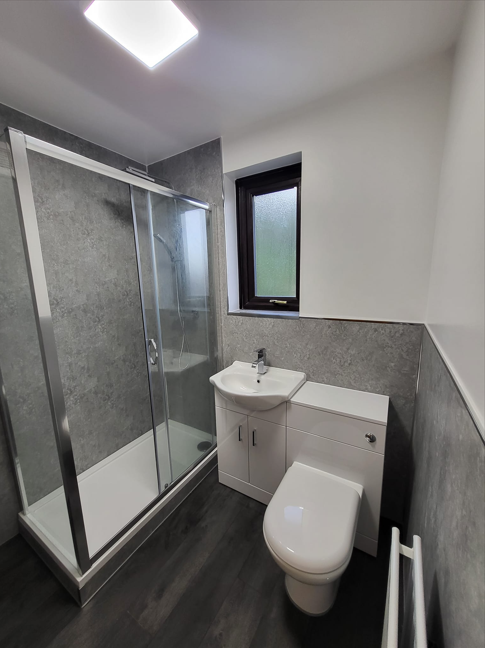
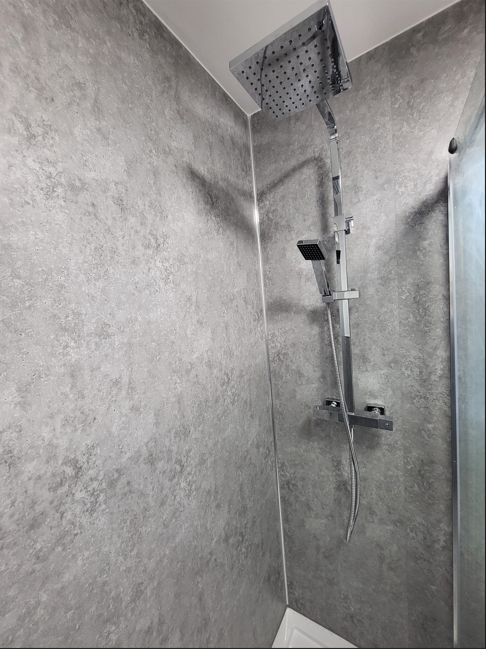
    This is where tiles have traditionally had the advantage — but that gap has closed significantly in recent years. Modern PVC wall panels are available in a wide range of premium finishes including marble looks, natural stone, concrete, and timber — with large format panels that create a seamless, grout-free finish that actually looks more luxurious than most tiled bathrooms.

    At Deco Wall Panels our range includes eight premium finishes — from the classic elegance of Alpine Marble and Hampton Marble to the bold drama of Graphite Storm and the warm coastal feel of Coastal Stone and Sahara Marble.

    DURABILITY AND LONGEVITY

    Quality ceramic tiles are extremely durable and can last decades. However grout — the weak point of any tiled bathroom — typically needs attention every 5-10 years.

    Quality PVC wall panels are also highly durable, resistant to impact, moisture, and temperature changes, and require no ongoing maintenance beyond regular cleaning. With no grout to deteriorate the long term performance of a PVC panel bathroom is arguably superior to tiles in Australian conditions.

    Ready to explore wall panels for your bathroom?

    At Deco Wall Panels we supply premium waterproof PVC wall panels in eight stunning finishes, shipping Australia-wide from our Gold Coast base. Send us your bathroom dimensions and a photo and we’ll recommend the perfect panels for your space.

    Get free advice and a quote → Contact

Deco Wall Panels

Deco Wall Panels supplies waterproof PVC bathroom wall panels that replace tiles, with an easy DIY install and Australia-wide shipping.

Twenty Twenty-Five

Designed with WordPress